One of the most persistent myths about bipolar disorder is that mood shifts are sudden, chaotic or unpredictable. From the outside, episodes can appear to arrive “out of nowhere”. From the inside, they often feel just as confusing.
Modern neuroscience tells a very different story.
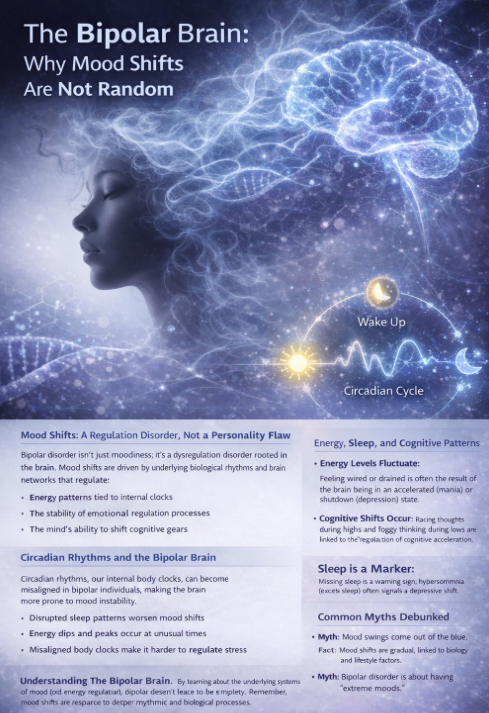
Mood changes in bipolar disorder are not random events. They are the visible outcome of gradual, measurable changes in brain regulation, energy systems and biological timing. Understanding this shift — from randomness to regulation — is key to reducing shame, improving self-awareness and recognising early signals before episodes fully take hold.
Bipolar Disorder as a Regulation Condition
Rather than being a disorder of mood alone, bipolar disorder is increasingly understood as a regulation disorder.
Three systems are particularly involved:
- Emotional regulation
- Energy and arousal regulation
- Circadian (biological clock) regulation
When these systems remain synchronised, mood tends to stay stable. When they begin to drift out of alignment, mood changes follow — often days or weeks later.
The Role of the Circadian Clock
The circadian rhythm acts as the brain’s master timing system. It influences:
- Sleep and wake cycles
- Hormone release
- Body temperature
- Attention and alertness
- Emotional reactivity
In bipolar disorder, this clock is more sensitive to disruption.
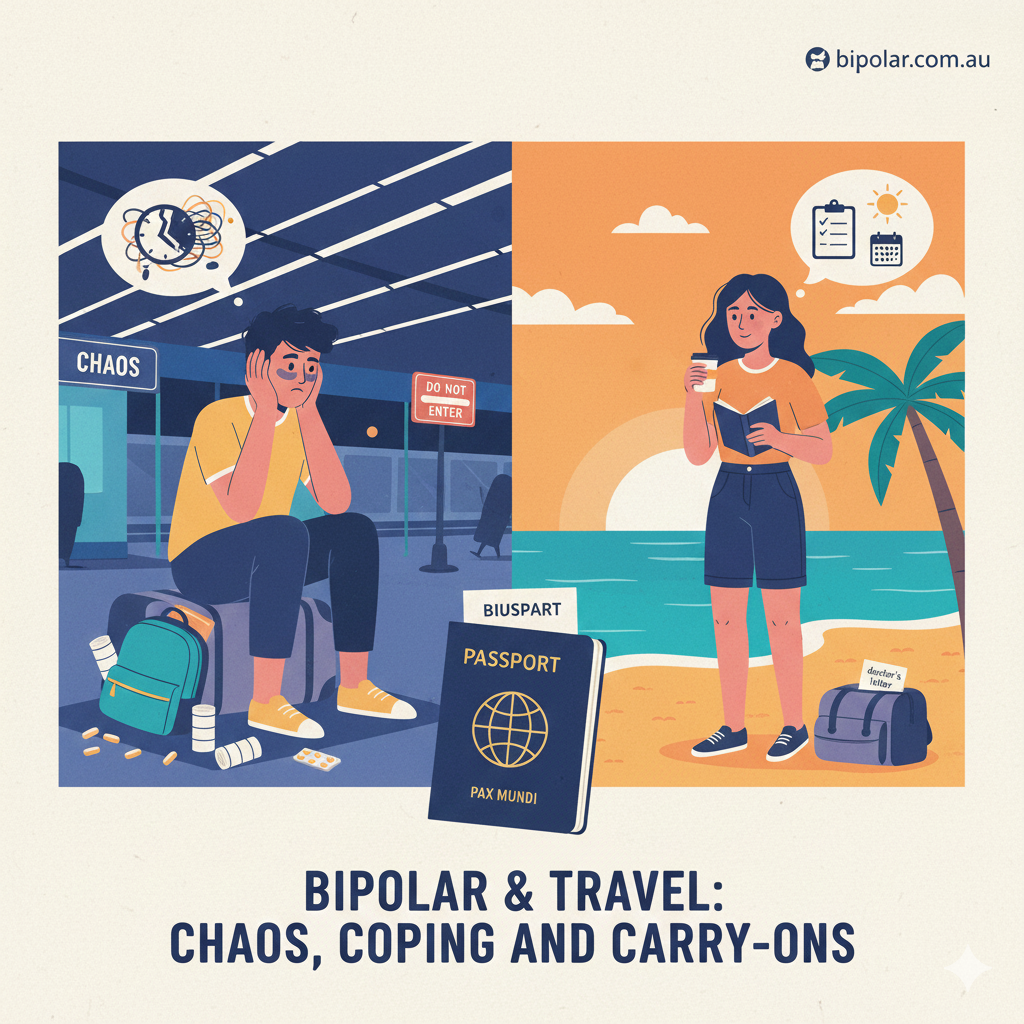
Small changes — such as irregular sleep, late-night stimulation, travel across time zones or sustained stress — can gradually destabilise circadian timing. Once the rhythm shifts, downstream systems follow, increasing vulnerability to mood episodes.
This explains why sleep disruption is often one of the earliest and most reliable warning signs of an emerging episode.
Energy Before Mood
A key insight from longitudinal studies is that energy changes often precede mood changes.
Examples include:
- A sustained rise in mental speed or restlessness
- Reduced need for recovery time
- Heightened sensory sensitivity
- A gradual drop in physical or cognitive energy
Mood is frequently the last system to visibly shift. By the time someone “feels” unwell, underlying regulation changes may already be well established.
Why Episodes Feel Sudden
If mood shifts are gradual, why do episodes feel abrupt?
There are two main reasons:
1. Threshold Effects
The brain compensates for instability until it can no longer do so. Once a threshold is crossed, symptoms accelerate rapidly — creating the illusion of sudden onset.
2. Retrospective Awareness
Humans are better at noticing mood changes than subtle behavioural or physiological drift. Early signals are often only obvious in hindsight, once the episode is already clear.
Pattern Over Personality
Another damaging misconception is that bipolar mood shifts reflect personality traits, motivation or character.
In reality, patterns matter far more than traits.
Common early pattern changes include:
- Increasing rigidity or urgency in thinking
- Changes in communication frequency or tone
- Altered risk tolerance
- Withdrawal from previously neutral routines
These shifts are functional, not moral. They reflect changing brain states — not personal failure.
Why Stress Is a Multiplier, Not a Cause
Stress alone does not cause bipolar episodes. Instead, it acts as a multiplier.
When regulatory systems are already under strain, stress accelerates instability by:
- Disrupting sleep timing
- Increasing cognitive load
- Reducing recovery capacity
This explains why the same stressor may have little impact at one time and significant impact at another.
The Value of Predictability
Understanding that bipolar episodes follow patterns — even when complex — offers several advantages:
- Reduced self-blame
- Earlier recognition of personal warning signs
- Improved decision-making during vulnerable periods
- A greater sense of agency and predictability
Predictability does not mean control over every outcome. It means recognising that mood shifts are part of a process, not a surprise attack.
A Different Way to Think About Stability
Stability is often framed as the absence of symptoms. A more useful definition is regulatory balance over time.
This reframing encourages:
- Attention to rhythms rather than moods alone
- Respect for recovery and rest
- Awareness of gradual drift rather than dramatic change
Key Takeaways
- Bipolar mood shifts are not random
- Changes in regulation precede changes in mood
- Circadian rhythm disruption plays a central role
- Energy and cognition often shift before emotions
- Patterns matter more than personality
Bipolar disorder is not chaos — it is sensitivity. When understood through the lens of regulation rather than randomness, mood shifts become more explainable, more predictable and, over time, more manageable.