
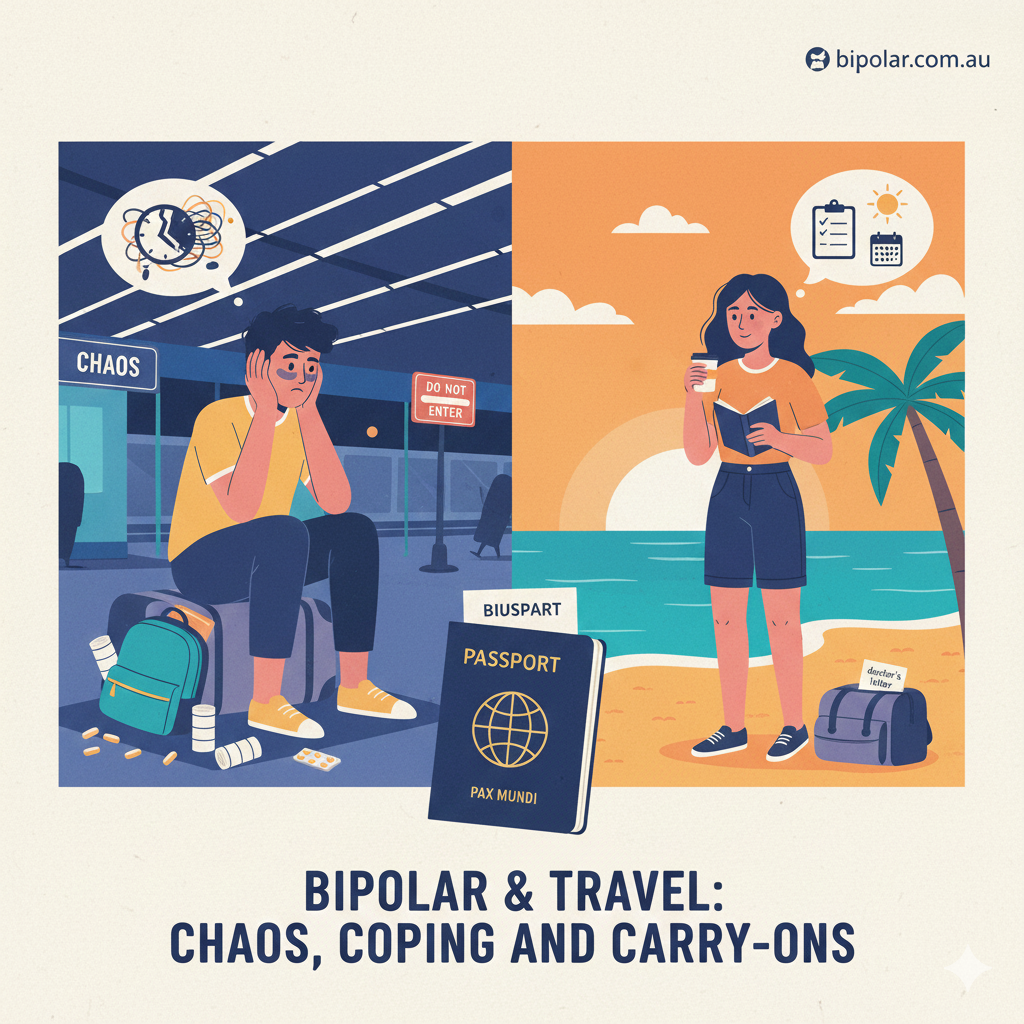
For many Australians living with bipolar disorder, the idea of international travel can feel overwhelming. The combination of jet lag, changing time zones, and the logistical challenge of managing medication can act be a barrier to seeing the world. However, with thorough preparation and the right information, travel is not only possible but can be a deeply rewarding experience.
This guide provides an overview of two critical areas where information is often scarce: Travel Insurance and Medication Logistics.
1. Understanding Travel Insurance and Mental Health
In Australia, mental health conditions—including bipolar disorder—are generally classified by insurers as pre-existing medical conditions. This means that a standard “off-the-shelf” policy may not automatically cover you for claims related to your diagnosis.
- The Disclosure Requirement: Under the Disability Discrimination Act, Australian insurers must assess risk based on actual data rather than stereotypes. However, you are still required to disclose your diagnosis when applying for cover.
- The “Medical Screening” Process: Many insurers require a brief online medical screening. Depending on your recent health history (e.g., hospitalisations or changes in medication), they may offer cover for an additional premium.
- Exclusions to Watch For: Even if you are covered, some policies have a “General Exclusion” for mental health if the traveller is currently undergoing a change in bipolar medication or has been hospitalised in the last 12–24 months. You can find more bipolar information regarding long-term stability on peer-led platforms to help gauge your readiness for travel.
2. Managing Medication Across Borders
Maintaining a consistent sleep routine is the cornerstone of stability, but physical medication logistics are just as vital.
- The “Letter of Necessity”: If you are carrying medications like Lithium or Quetiapine, the Australian Government’s Smartraveller service recommends carrying a letter from your doctor.
- Original Packaging: Always keep your medication in its original pharmacy packaging with the prescription label clearly visible. Reviewing a bipolar medication guide can help you identify the generic names of your prescriptions, which is helpful if you need to seek medical assistance abroad.
- Quantity Limits: Generally, you should only carry a “personal use” quantity (usually a 90-day supply). If your trip is longer, you may need to research how to access a psychiatrist or GP in your destination country.
3. The Jet Lag Factor
Circadian rhythm disruption is a documented trigger for mood episodes. Research highlights that sleep disturbance is one of the most common precursors to a manic episode. When crossing time zones, many travellers work with their healthcare team to develop a “transition plan.”
Using a mood tracker during your trip can provide a visual record of how your body is responding to the new environment. If you notice significant shifts, it may be a sign to prioritise rest. Consistent mood monitoring allows for early intervention before a mood shift becomes a crisis.
Summary Checklist for Travellers
- Disclose your diagnosis to your travel insurer to ensure you are legally covered.
- Request a doctor’s letter at least two weeks before departure.
- Pack medication in carry-on luggage in case your checked bags are delayed.
- Research the local laws of your destination; some medications common in Australia are restricted in other countries.
References
- Smartraveller (DFAT): “Travelling with a mental health condition.” https://www.smartraveller.gov.au/before-you-go/health/mental-health
- Bipolar BD: “Bipolar Resources and Peer Support.” https://bipolarbd.com/
- National Institute of Mental Health: “Bipolar Disorder Information.” https://www.nimh.nih.gov/health/topics/bipolar-disorder
- RANZCP: “Affordability and Access to Mental Healthcare.” https://www.ranzcp.org/news-policy/policy-and-advocacy/reports/keeping-your-head-above-water